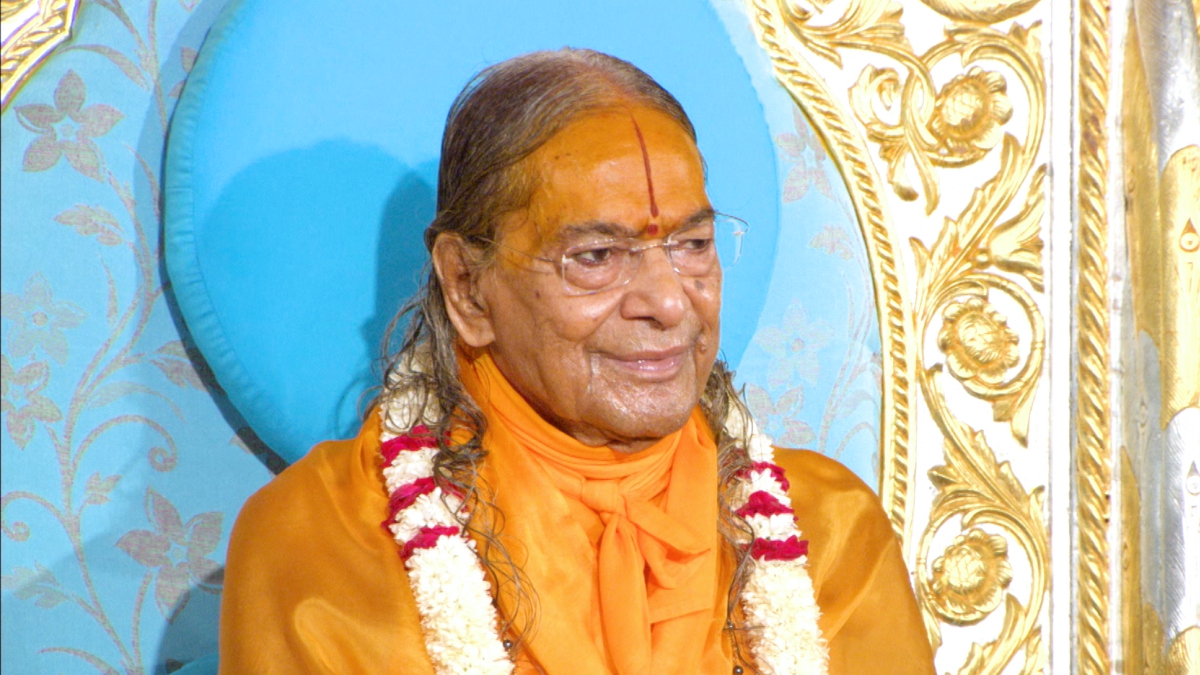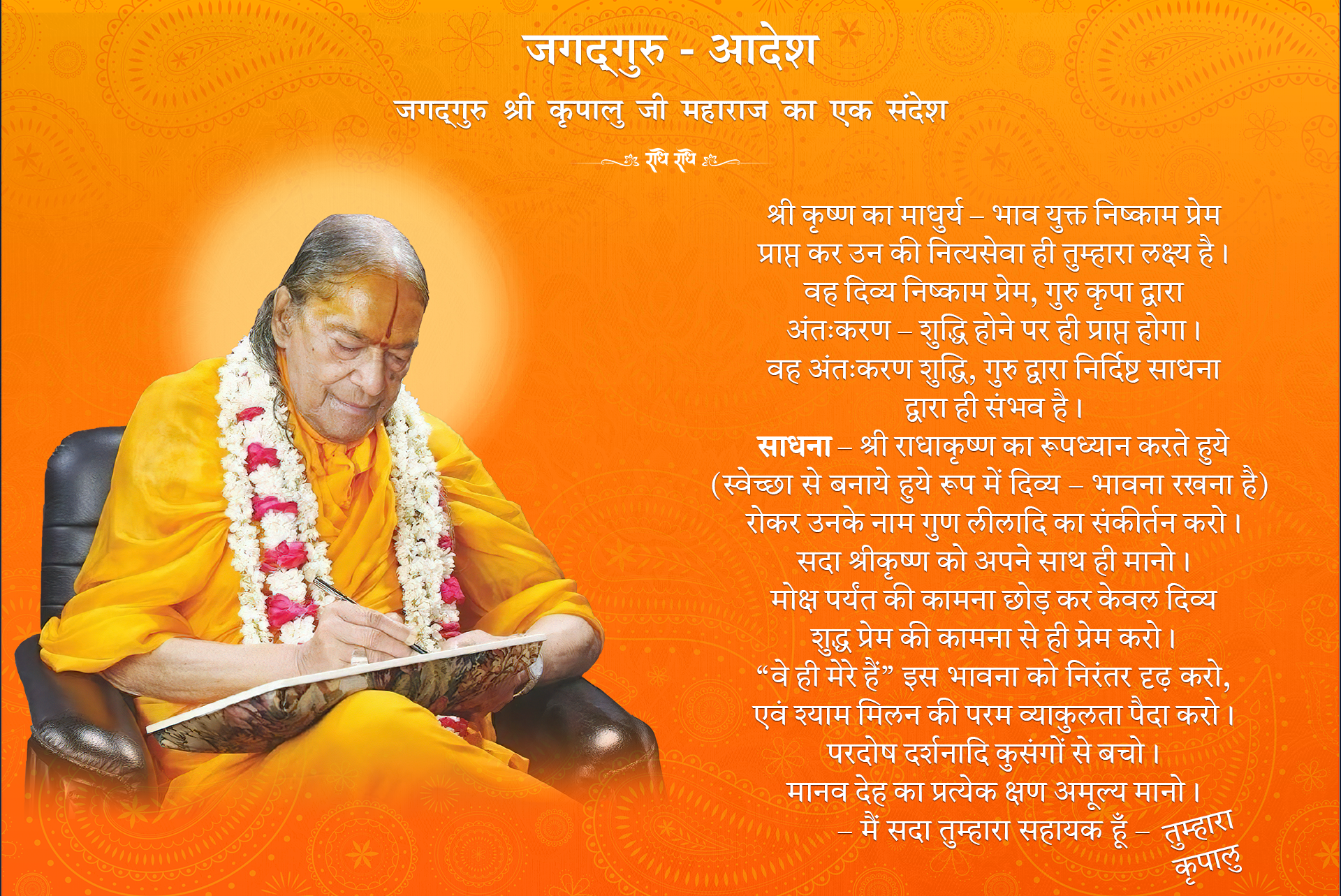

Jagadguru Shri Kripalu Ji Maharaj

Latest from our Blog

KNOWLEDGE CENTER

The Science of ‘Roopdhyan Meditation’

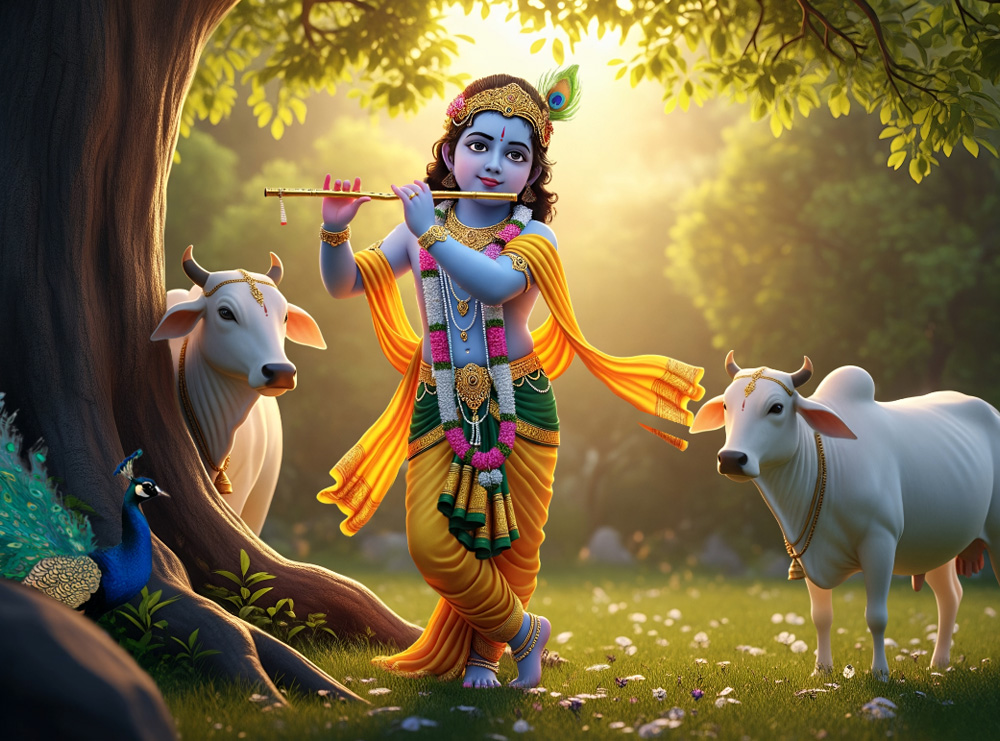
The science of Roopdhyan — as taught in the Vedas, the Upanishads, the Bhagavad Gita, the Srimad Bhagavatam, the Ramcharitmanas, the Narada Bhakti Sutra, the Padma Purana and other scriptures — is an indisputable, established principle. It proclaims that the Supreme — the most complete Purushottam manifested as Shri Ram and Shri Krishna — is both the one attribute-less, formless divine Light and, for devotees, the sweetest personal form. In essence the Supreme is nirguna and nirākāra, but for the sake of mercy and love He manifests as the highest saguna, the personal God who can be known and loved. This teaching — that the formless Absolute and the personal Lord are not two opposites but one Reality manifesting as the Beloved — runs through the Upanishads, the Gita, the Srimad Bhagavatam and the great Purāṇas. That same teaching shows how Roopdhyan (meditation on the Lord’s form) becomes the living science of devotion: the means by which the jīva turns from material bonds into the loving relationship with God. For Roopdhyan, find a beautiful picture of Shri Krishna — one that truly appeals to you. Look at that picture carefully, then close your eyes and transform that still image into
Read More »

Reflect upon the merciful nature of the Guru

O Mind! Listen carefully to some reflections on the entity known as the Guru. The verse, guṁ rautīti guruḥ tells us that he who erases ignorance is the Guru. Even though the Vedas and other scriptures declare that the Guru and God are one entity, and that one can attain the bliss of divine love by the grace of either of these two, nevertheless, O mind you need to be aware of a secret. That is, that Śhyāmsundar (Shri Krishna) can never be attained without the Guru’s grace.” Previous Significance of Gopashtami Next The Science of ‘Roopdhyan Meditation’

Read More »

Significance of Gopashtami

Gopashtami is one of the most divine and blissful festivals among all the pastimes of Shri Krishna. On this day, the Supreme Lord Shri Krishna began the divine pastime of herding cows in Braj for the very first time.

The connection between Lord Krishna and cows is profound and integral to His divine identity. The Gochāran Leela, where Shri Krishna grazes the cows in the lush pastures of Vrindavan, is a cherished theme in the poems and writings of rasik saints. Jagadguru Shri Kripalu Ji Maharaj beautifully describes this divine scene in one of his poems in his signature literary work “Prem Ras Madira.”

Read More »

Significance of Sharad Poornima

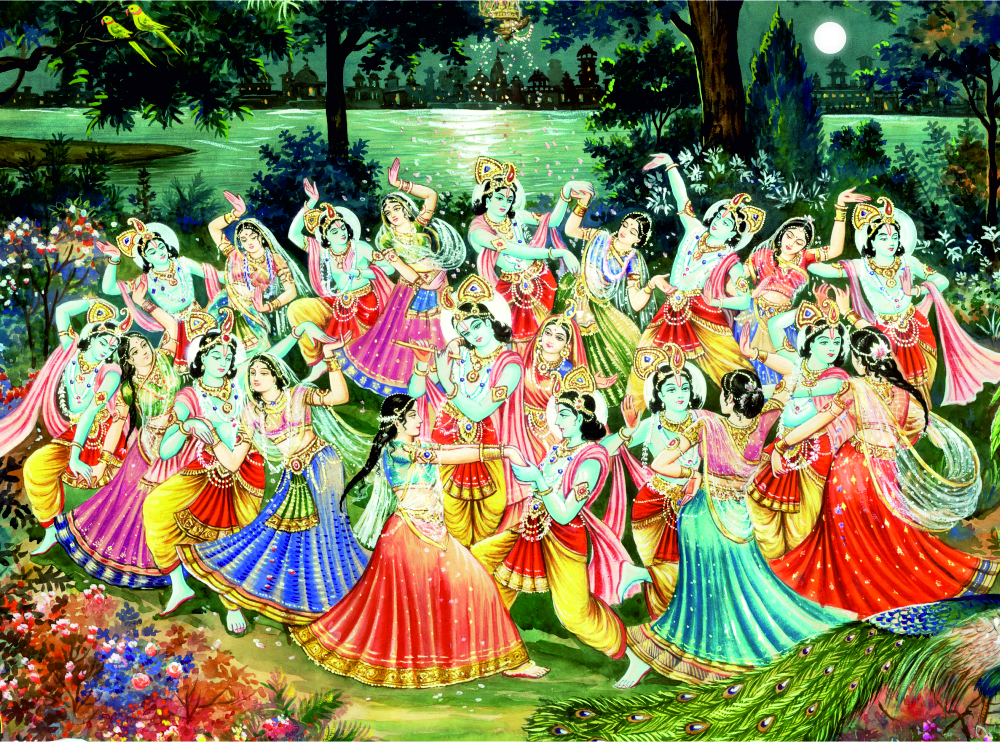
Of all the festivals that have existed since eternity, or will exist in the future, the crest jewel of all these festivals is the festival of Sharad Poornima. Why is this festival so special? It is on this night that Lord Shri Krishna performed the ‘Maharaas.’ To understand its significance, we look at the terms involved: One is ‘Ras’, Another is ‘Raas’. And yet another is ‘Maharaas.’ ‘Ras’ signifies the divine essence, and in this context, it refers to God Himself—Shri Krishna, the embodiment of ‘Ras.’ This is declared in the Vedas. When Lord Krishna bestows the essence of all ‘Ras’ upon individual souls, it is referred to as ‘Raas.’ However, when He engages in ‘Raas’ with countless Gopis, it is elevated to the realm of ‘Maharaas.’

Read More »

Reflect upon the merciful nature of the Guru

Are Man! Sun Guru-Tatva-Vichār

A sādhak, thoroughly conversant with the knowledge of spiritual principles, addresses his mind…
O Mind! Listen carefully to some reflections on the entity known as the Guru. The verse, guṁ rautīti guruḥ tells us that he who erases ignorance is the Guru. Even though the Vedas

Read More »

Radha Rani Is Grace Personified

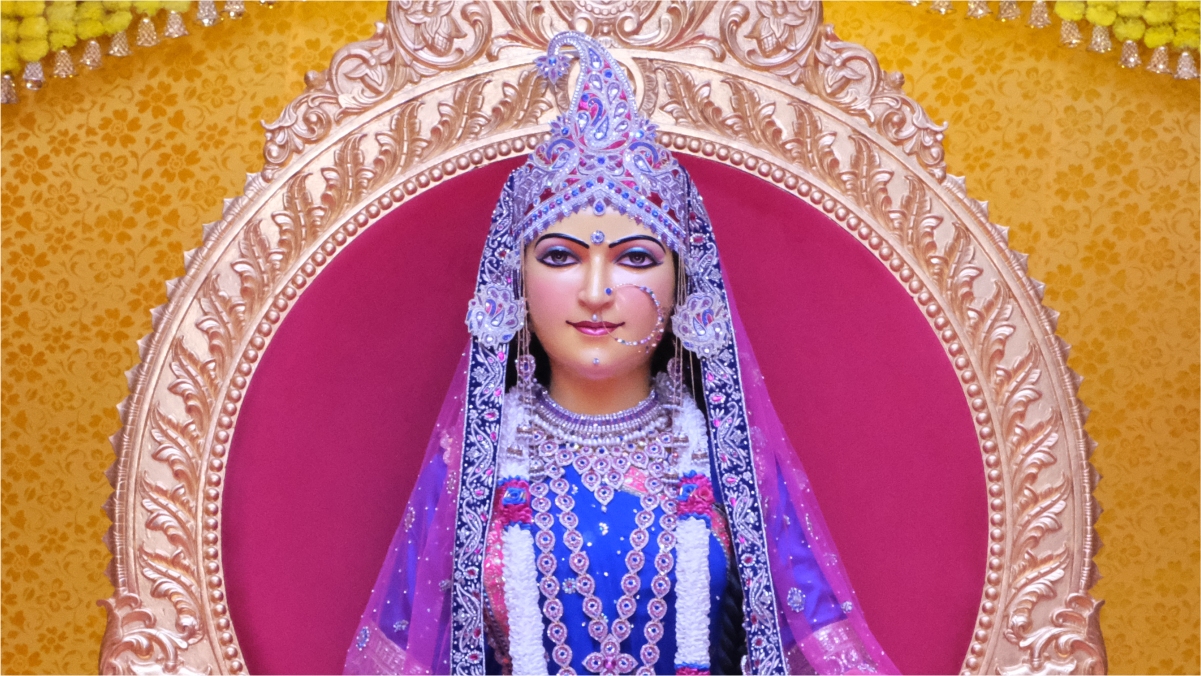
Kishori Ji is the personified form of grace. She is made of grace from inside as well as outside. She has no other work to perform except showering grace. She has no other desire.
 
A deity or statue is made of a single element. It could be wood, iron, stone, terracotta, clay

Read More »
Previous

Bhakti Mandir

Next

Roopdhyan Meditation