
The science of Roopdhyan — as taught in the Vedas, the Upanishads, the Bhagavad Gita, the Srimad Bhagavatam, the Ramcharitmanas, the Narada Bhakti Sutra, the Padma Purana and other scriptures — is an indisputable, established principle. It proclaims that the Supreme — the most complete Purushottam manifested as Shri Ram and Shri Krishna — is both the one attribute-less, formless divine Light and, for devotees, the sweetest personal form. In essence the Supreme is nirguna and nirākāra, but for the sake of mercy and love He manifests as the highest saguna, the personal God who can be known and loved.
This teaching — that the formless Absolute and the personal Lord are not two opposites but one Reality manifesting as the Beloved — runs through the Upanishads, the Gita, the Srimad Bhagavatam and the great Purāṇas. That same teaching shows how Roopdhyan (meditation on the Lord’s form) becomes the living science of devotion: the means by which the jīva turns from material bonds into the loving relationship with God.
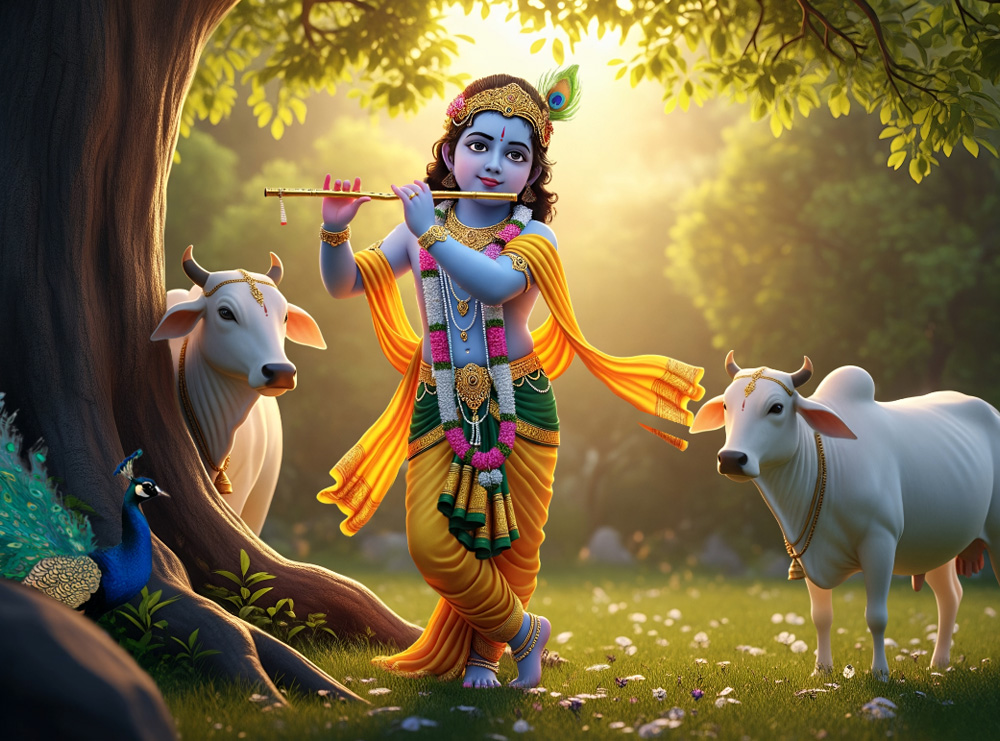
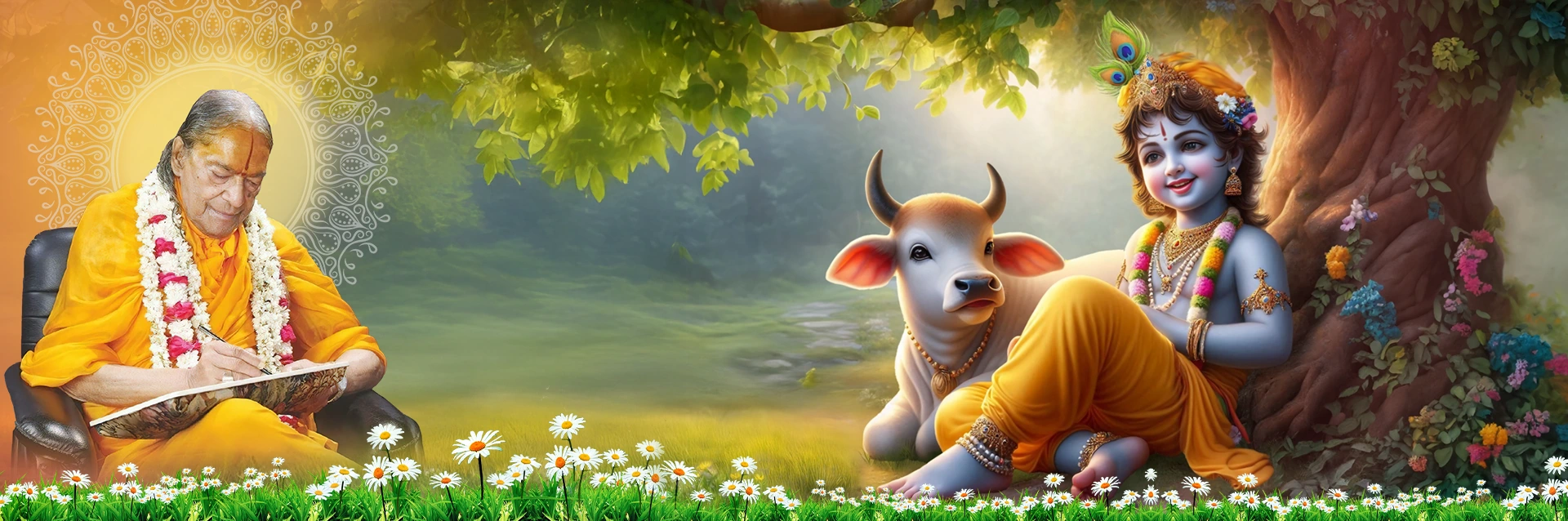
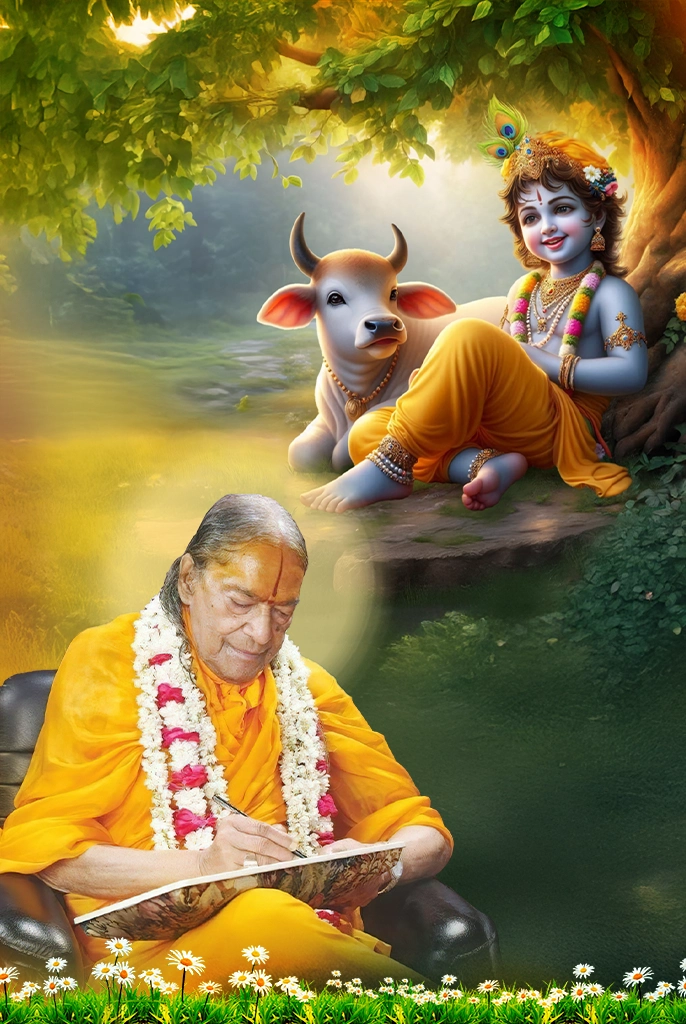
For Roopdhyan, find a beautiful picture of Shri Krishna — one that truly appeals to you. Look at that picture carefully, then close your eyes and transform that still image into a moving form — as if Shri Krishna has stepped out of the photograph and is walking towards you. The picture is motionless, the idol is motionless, but in Roopdhyan you must visualize the living, moving form: His eyelids blinking, His lips smiling, His glance meeting yours, perhaps making a gesture — movement in every limb.
Then open your eyes, look at the picture again, and close them to recreate that same moving form. This practice may take one or two months of steady effort.
If the mind wanders during Roopdhyan — and it will go wherever it already has attachment, whether to mother, father, son, wife, husband, daughter, or anyone else — that is due to past habit. When it happens, wherever your mind goes, place your envisioned form of Shri Krishna there. For example, if you love your daughter’s eyes, imagine Shri Krishna standing inside those eyes. If you love the Taj Mahal, visualize it and place Shri Krishna upon it. Wherever the mind goes, place Shri Krishna there. When you do this, the mind begins to become still; its restlessness diminishes.
When you train your mind so that Shri Krishna appears everywhere you look, it will no longer wander. Eventually, this becomes so strong that even when you open your eyes and see the world, you will naturally see Shri Krishna standing there. Look in one direction — He is there. Turn your gaze — He is there too. Slowly, with practice, you will reach the state where you feel you are never alone.
Understand this: without Roopdhyan, no form of devotion is complete. Whether you chant, read scriptures, sing kirtan, or perform rituals — all are only physical actions unless the mind is engaged. God notes only the attachment of your mind, not the movements of your body. The work of the mind is to think — to meditate. While doing Roopdhyan, you may also sing devotional songs, especially those that describe both God’s qualities and your own longing, as well as your requests to Him. This will deepen your attachment.